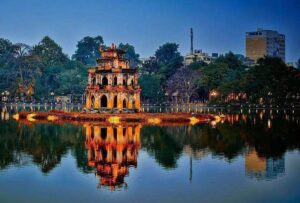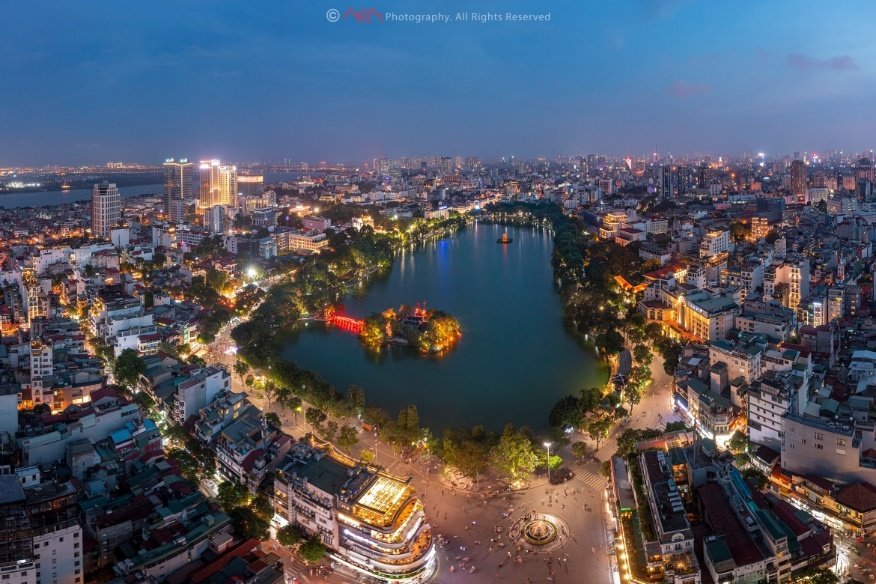
More than just a famous scenic spot in Hanoi, Hoan Kiem Lake (Ho Gươm) is a space intricately linked to the history, landscape, daily life, and memories of generations of residents. Through the article “Do Not Usurp the Heritage Values of Hoan Kiem Lake” by author Nguyen Thi Hau, familiar values of the lake are examined through the lens of community and cultural life. Located in the heart of Hanoi, Hoan Kiem Lake holds a special place in the capital’s cultural identity. The space surrounding the lake features renowned structures and landmarks such as Turtle Tower, Ngoc Son Temple, The Huc Bridge, Pen Tower, and Ink Slab Tower. Hoan Kiem Lake and Ngoc Son Temple are also recognized as special national monuments of Hanoi.
As a city develops, changes and the construction of new spaces become inevitable. However, alongside modernization, every city needs to retain spaces that have long been tied to human history and everyday life. Reading “Do Not Usurp the Heritage Values of Hoan Kiem Lake” by Nguyen Thi Hau made me realize that Hoan Kiem Lake is not merely a famous location in Hanoi, but an integral part of the memories and lives of many generations. This brought to mind my course on Community Cultural Life Development, as I understand that a cultural space is defined not only by its landscape or structures, but also by its people, their activities, and the emotional bonds forged within it.
What impressed me most about the article was how the author approached the issue of Hoan Kiem Lake from a deeply relatable perspective. Rather than framing the lake solely as a scenic beauty or historical landmark, the author highlights its connection to simple everyday human activities—strolling, meeting friends, reading, exercising, sightseeing, taking photos, or simply sitting by the water. It is precisely these seemingly minor details that form a significant part of the lake’s intrinsic value. Through this, I realized that for a place to become part of a community’s collective memory, it does not necessarily require monumental events; often, it is shaped by familiar experiences repeated over many years.
I also particularly appreciated the article’s concept of “urban memory.” In my view, this is a unique aspect because memory is not something that can be easily seen or measured. Someone who has a strong bond with Hanoi might remember Hoan Kiem Lake through images of its water surface, tree-lined shores, Turtle Tower, The Huc Bridge, or the simple feeling of walking around the lake. These images and feelings gradually become part of each person’s personal memory. Therefore, assessing Hoan Kiem Lake solely by its tangible material values misses the full scope of its significance. I believe it is the harmonious combination of landscape, history, people, and memory that makes Hoan Kiem Lake such an extraordinary space.
Another idea in the article that gave me pause was the concept of “empty space.” Previously, when considering spatial development, I usually thought of building more structures, adding amenities, or modernizing the landscape. However, through this article, I learned that certain values reside within unbuilt spaces. The open lake surface, the stretch of sky, the rows of trees, the vistas looking down from the streets to the water, and the distance between buildings all contribute to the distinct feel of Hoan Kiem Lake. This helped me realize that in developing cultural spaces, preserving what already exists can be just as important as creating new additions.
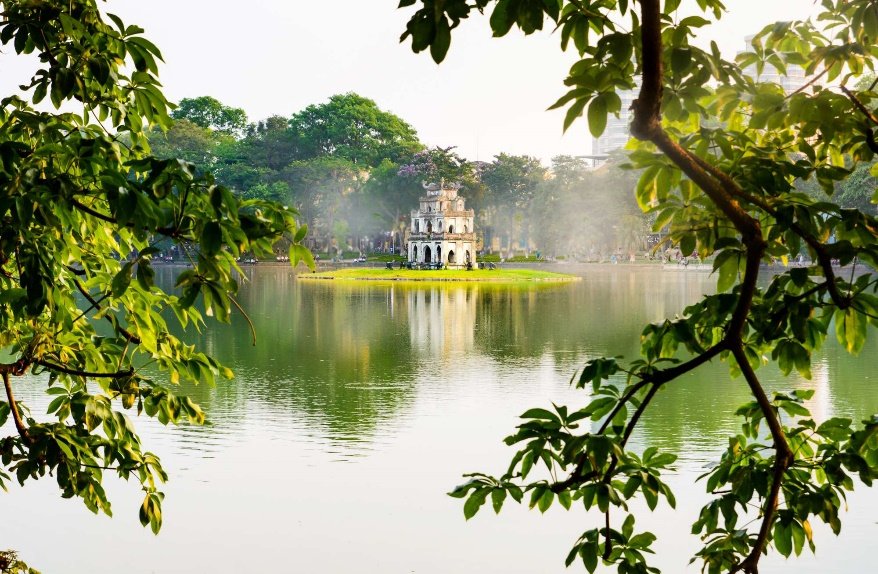
Furthermore, I strongly agree with the author’s view on maintaining a “human scale” within the space of Hoan Kiem Lake. A space, no matter how modern or grandly constructed, loses its value if it makes people feel insignificant or detached. In my opinion, a public space should first and foremost enable people to use it, rest, connect, and feel comfortable. This directly connects to the development of community cultural life, as the ultimate goal of development must always prioritize human beings and the community’s quality of life.
A notable point in the article is the author’s description of Hoan Kiem Lake as a “living heritage.” It is not a site meant merely for static preservation like a museum artifact, but a living environment actively used by people creating new values daily. Locals continue to pass through, walk, exercise, and relax; tourists continue to visit, take photos, and experience the setting. These ongoing activities keep the space alive. From this, I understand that preservation does not mean keeping everything static; rather, it means knowing how to adapt without losing the elements that define the space’s identity.
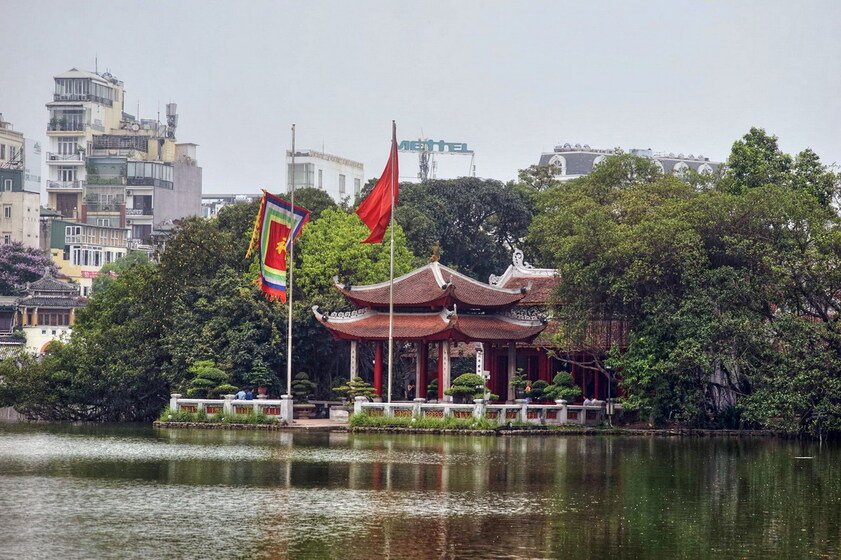
This provides a clearer link to the course on Community Cultural Life Development. In the process of development, the community should not merely be passive recipients of top-down changes; rather, they must be recognized as key stakeholders with deep emotional ties, real needs, and an active voice regarding their cultural space. With Hoan Kiem Lake, Hanoi residents have shaped its value through their own daily use and experiences. Therefore, when urban planning or landscape changes occur, considering community sentiments and needs is vital. If a change prevents residents from recognizing their familiar surroundings, then no matter how modern the landscape becomes, that development fails to achieve true meaning.
From the article, I also gained a deeper understanding of the relationship between conservation and development. The two are not inherently contradictory. A heritage space can still be renovated, upgraded, and adapted to modern life. Aging structures can be repaired, infrastructure improved, and new conveniences introduced. However, the crucial step is identifying the core elements that truly define the space’s value to approach them thoughtfully. The author also emphasized that old things are not automatically valuable, nor are non-ancient elements necessarily worthless. What matters most is how meaningful an element is to the community’s memories and daily life.
From the perspective of our coursework, I believe this offers a valuable lesson for cultural practitioners. When managing and developing a cultural space, one cannot rely solely on visible elements like architecture, landscape, or physical infrastructure. It is essential to understand intangible spiritual values, daily habits, memories, and the community’s sense of belonging. Furthermore, opportunities must be created for the community to participate in preserving and promoting these values. When community members feel connected and responsible for a space, preservation shifts from being merely an administrative mandate to a collective effort by the people who inhabit that space.
Through the article, I also realized that cultural value does not always reside in the most prominent features. Sometimes, a row of trees, a stone bench, a view overlooking the water, or a familiar daily routine carries immense personal value. While these may not be classified as grand “monuments,” they foster a deeply felt sense of place. Thus, in developing community cultural life, recognizing and nurturing these seemingly ordinary values is just as essential.
What stayed with me most after reading the article was the author’s central question: how can Hoan Kiem Lake evolve while allowing the people of Hanoi to still recognize it as their own? In my view, this is not just an issue unique to Hoan Kiem Lake, but a fundamental question for many cultural spaces. As society advances, familiar places will inevitably change over time. However, change must be executed thoughtfully so as not to erode the values established and cherished by the community over generations.
Overall, the article “Do Not Usurp the Heritage Values of Hoan Kiem Lake” provided me with a deeper perspective on the concepts of heritage and cultural space. I understand that heritage does not exist solely in ancient structures or documented historical facts; it lives within the memories, activities, and sentiments of the community. In relation to the course on Community Cultural Life Development, the article heightened my awareness of the interconnected relationship between people, space, culture, and community. Development does not mean replacing everything for the sake of novelty and modernity; it means discerningly selecting, preserving, and promoting meaningful values while empowering the community to continue using, participating in, and creating new ones. Only then does development become truly meaningful and capable of sustaining cultural values for future generations.
Student: Lam Tu Nguyen
Faculty: Heritage and Ethnic Culture
University: Ho Chi Minh City University of Culture
REFERENCES
[1] Hau Khao Co (2026), “Do Not Usurp the Heritage Values of Hoan Kiem Lake”, Hau Khao Co, https://haukhaoco2010.blogspot.com/2026/09/ung-chiem-dung-gia-tri-di-san-cua-ho.html, accessed September 13, 2026.
[2] VinWonders (August 17, 2025), Ngoc Son Temple Hanoi – A-Z Travel and Worship Guide, https://vinwonders.com/vi/wonderpedia/news/den-ngoc-son-ha-noi/ (Accessed: September 14, 2026).
[3] Department of Cultural Heritage – Ministry of Culture, Sports and Tourism, Historical Monument and Scenic Spot of Hoan Kiem Lake and Ngoc Son Temple, https://dsvh.gov.vn/di-tich-lich-su-va-danh-lam-thang-canh-ho-hoan-kiem-va-den-ngoc-son-2978 (Accessed: September 14, 2026).